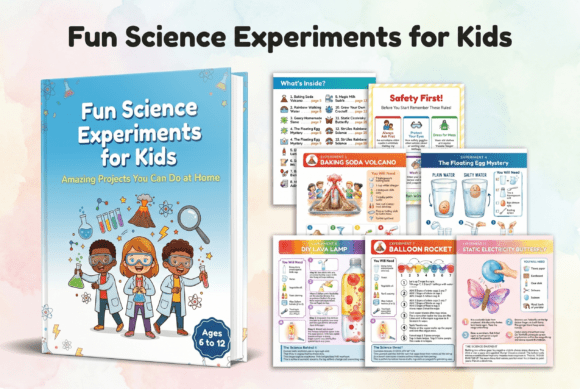
Fun Science Experiments for Kids: Bridging Learning and Play in the Modern Educational Landscape
In today’s fast-paced, technology-driven world, the way children learn is evolving. As parents, educators, and creators, we are constantly seeking innovative ways to engage young minds while fostering curiosity and critical thinking. Enter Fun Science Experiments for Kids, a groundbreaking workbook that transforms traditional learning into an interactive, hands-on adventure. This resource is not just about experiments—it's about cultivating a lifelong love of science through play.
Fun Science Experiments for Kids offers a unique blend of creativity, simplicity, and educational value. Designed for both home and classroom environments, this workbook provides a structured yet flexible approach to science education. It empowers children to explore the wonders of the natural world using everyday materials, making it accessible to all families and educators regardless of budget or resources.
The Rise of Hands-On Learning
The modern educational landscape is shifting toward experiential learning. According to recent studies, students who engage in hands-on activities retain information better and develop a deeper understanding of complex concepts. Fun Science Experiments for Kids aligns perfectly with this trend by providing step-by-step experiments that encourage observation, hypothesis testing, and real-world application.
This shift is particularly relevant in the context of STEM (Science, Technology, Engineering, and Math) education, which has become a cornerstone of 21st-century learning. As industries increasingly demand innovation and problem-solving skills, early exposure to scientific thinking is more important than ever. By integrating science into daily play, Fun Science Experiments for Kids helps prepare children for future academic and career opportunities.
Why Fun Science Experiments for Kids Resonates with Educators and Parents
One of the most compelling aspects of Fun Science Experiments for Kids is its ability to meet the changing needs of today’s learners. In an era where screen time is prevalent, there is a growing desire among parents and educators to provide alternatives that promote active engagement and physical interaction.
Moreover, the workbook addresses the need for safe, simple, and affordable learning tools. Many experiments require only common household items—like baking soda, vinegar, food coloring, and plastic bottles—which makes it easy for families to get started without investing in expensive lab equipment. This accessibility is a key factor in its popularity across diverse demographics.
Another reason why Fun Science Experiments for Kids is gaining attention is its emphasis on inquiry-based learning. Rather than simply following instructions, children are encouraged to ask questions, make predictions, and analyze results. This method fosters critical thinking and independent learning, which are essential skills in both academic and professional settings.
Connecting Science to Everyday Life
Fun Science Experiments for Kids goes beyond traditional science lessons by connecting abstract concepts to tangible experiences. For example, when exploring chemical reactions, children can observe how baking soda and vinegar create a fizzing volcano. When studying water and density, they can experiment with oil and water to see how different liquids interact.
These experiments are not only entertaining but also serve as a gateway to understanding fundamental scientific principles. By engaging with these activities, children begin to see science as something that is not confined to textbooks or laboratories but is present in their everyday lives.
Furthermore, the workbook includes experiments related to nature and earth science, allowing children to explore topics like plant growth, weather patterns, and environmental sustainability. These activities help instill a sense of responsibility and awareness about the world around them, making science education more meaningful and impactful.
The Role of Creativity in Science Education
Creativity is often overlooked in traditional science education, but Fun Science Experiments for Kids recognizes its importance. Each experiment encourages children to think outside the box, adapt materials, and come up with their own variations. This creative freedom not only enhances engagement but also nurtures innovation and problem-solving skills.
For educators and parents, this aspect of the workbook is particularly valuable. It allows for customization based on individual interests and learning styles. Whether a child is fascinated by colors, motion, or chemical reactions, Fun Science Experiments for Kids offers a variety of activities that cater to different passions and strengths.
In addition, the workbook promotes collaboration and communication skills. When children work together on experiments, they learn to share ideas, explain their observations, and build upon each other’s discoveries. These social and emotional learning outcomes are crucial for holistic development.
Aligning with Broader Trends in Education and Technology
The increasing integration of technology in education has led to a greater demand for digital resources. However, Fun Science Experiments for Kids strikes a balance between digital and hands-on learning. While it is a physical workbook, its content can be enhanced with digital tools such as videos, interactive simulations, and online discussion forums. This hybrid approach ensures that children benefit from both tactile and digital learning experiences.
Moreover, the workbook supports the growing interest in personalized learning. With the rise of AI and adaptive learning platforms, there is a strong emphasis on tailoring educational content to individual needs. Fun Science Experiments for Kids provides a foundation for this by offering a range of experiments that can be modified and expanded based on a child’s level of understanding and curiosity.
As remote and hybrid learning models become more common, resources like Fun Science Experiments for Kids are invaluable. They provide structure and engagement for children who may be learning from home, ensuring that science education remains interactive and enjoyable even in virtual settings.
Conclusion: A Gateway to Scientific Curiosity
Fun Science Experiments for Kids represents a powerful intersection of education, creativity, and play. It meets the evolving needs of modern learners by providing a safe, accessible, and engaging way to explore science. Whether used in classrooms, homeschooling environments, or after-school programs, this workbook serves as a valuable tool for fostering scientific literacy and critical thinking.
As we continue to navigate the challenges and opportunities of the 21st century, it is clear that hands-on, inquiry-based learning will play a central role in shaping the next generation of scientists, innovators, and problem-solvers. Fun Science Experiments for Kids is not just a workbook—it’s a catalyst for discovery, curiosity, and lifelong learning.