Positive Thinking for Little Minds
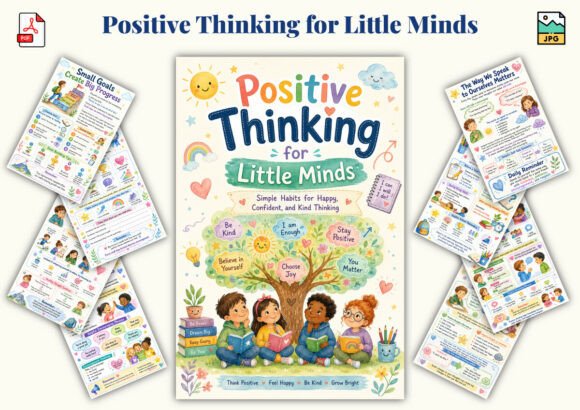
Teaching children to think positively isn’t just about smiling more or saying “I can do it.” It’s about building a foundation of emotional resilience, self-belief, and healthy habits that will serve them throughout life. Positive Thinking for Little Minds is a beautifully crafted 30-page printable workbook designed specifically for this purpose. Whether you’re a parent, teacher, counselor, or homeschool educator, this resource offers a practical way to guide kids through meaningful reflections, creative exercises, and confidence-building activities that foster gratitude, kindness, and emotional awareness.
The workbook uses a soft, uplifting watercolor doodle theme with clean layouts that are easy for kids to engage with. Its interactive format encourages children to explore topics like positive thinking, self-confidence, goal setting, friendship skills, and calm thinking strategies in a fun and accessible way. Each page is thoughtfully designed to support young minds in developing a growth mindset and learning how to navigate emotions with grace and understanding.
Where and When to Use Positive Thinking for Little Minds
Positive Thinking for Little Minds is incredibly versatile and can be used in a variety of settings. Parents might use it during bedtime routines or quiet time to help their children reflect on the day and build positive habits. Teachers and homeschoolers can incorporate it into weekly lessons or character education programs, using the activities as prompts for discussion or individual reflection. Counselors and therapists may find it useful as a tool for teaching emotional regulation and coping strategies to children dealing with anxiety, stress, or self-doubt.
For example, a parent might print out the gratitude pages and have their child draw something they’re thankful for each night before bed. A teacher could use the goal-setting section to help students break down larger projects into manageable steps, fostering a sense of accomplishment and motivation. In a classroom setting, the kindness exercises can be used to promote empathy and social-emotional learning among students.
Who Benefits from Positive Thinking for Little Minds
This workbook is ideal for anyone who wants to nurture emotional intelligence and self-belief in children. Educators looking for supplementary materials to support social-emotional learning will find it particularly valuable. Homeschooling parents can use it as a structured yet flexible resource to teach important life skills. Counselors and mental health professionals may appreciate its gentle approach to helping children develop emotional awareness and resilience.
Kids themselves will benefit from the engaging activities that make learning about positive thinking feel like play. The reflection prompts encourage them to think critically about their feelings and actions, while the creative exercises allow them to express themselves in unique ways. The workbook also helps children understand the importance of patience, kindness, and gratitude—skills that are essential for building strong relationships and personal confidence.
What Makes Positive Thinking for Little Minds Stand Out
One of the key strengths of Positive Thinking for Little Minds is its focus on real-life applications. Instead of simply listing abstract concepts, the workbook provides practical scenarios that children can relate to. For instance, the calm thinking strategies section includes exercises that help kids manage frustration or disappointment in everyday situations, such as losing a game or struggling with homework.
The inclusion of high-quality PDF and JPG files makes it easy to print and use immediately. The 6 x 9 inch size is perfect for small hands, and the kid-friendly design ensures that even younger children can navigate the pages independently. The clean layouts and colorful illustrations also make it an appealing resource for children who might otherwise be reluctant to engage with traditional worksheets or textbooks.
Considerations Before Using Positive Thinking for Little Minds
While Positive Thinking for Little Minds is a powerful tool, it’s important to consider how best to integrate it into your routine. Some users may find that certain activities work better than others depending on the age and personality of the child. For instance, younger children might benefit more from the drawing and coloring exercises, while older kids may prefer the reflection prompts and goal-setting activities.
It’s also worth considering how often to use the workbook. Daily engagement can be beneficial, but it’s important not to overwhelm children with too many tasks at once. A consistent but flexible approach—such as using one activity per day or week—can help maintain interest and prevent burnout.
Finally, it’s important to remember that positive thinking is a skill that develops over time. While the workbook provides a solid foundation, it should be used in conjunction with other efforts to support a child’s emotional well-being, such as open conversations, modeling positive behavior, and creating a supportive environment at home or school.
Real Outcomes from Using Positive Thinking for Little Minds
Parents and educators who have used Positive Thinking for Little Minds report seeing noticeable improvements in their children’s confidence, emotional awareness, and overall happiness. One parent shared that after using the gratitude pages regularly, her child started expressing appreciation for small things in daily life, which helped reduce negative behaviors and increase self-esteem.
A teacher noted that incorporating the goal-setting exercises into her classroom helped students take ownership of their learning and stay motivated throughout the year. Another user mentioned that the calm thinking strategies were especially helpful during times of stress, such as exams or transitions between school and home life.
These real-world outcomes highlight the value of Positive Thinking for Little Minds as a practical, effective resource for nurturing young minds. By making positive thinking a regular part of a child’s routine, parents and educators can help them build the emotional resilience and confidence needed to thrive in all areas of life.