Kids Logic Puzzle Workbook
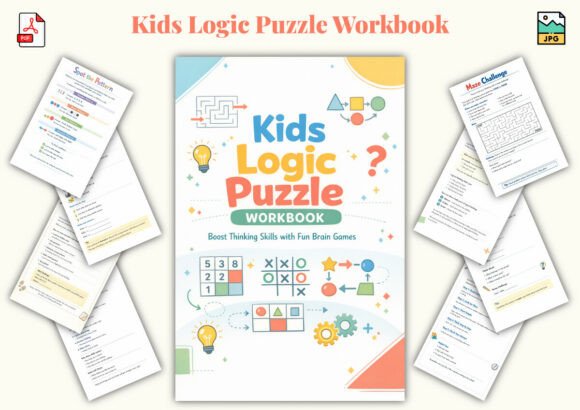
The Kids Logic Puzzle Workbook is a valuable resource for parents, educators, and caregivers looking to support cognitive development in children through structured, engaging activities. This 32-page workbook is designed to integrate seamlessly into learning routines, offering a blend of logic, problem-solving, and critical thinking exercises that are both educational and entertaining. Whether used as a supplement to schoolwork, a tool for homeschooling, or a fun way to keep kids mentally active during downtime, the workbook provides a clear path to skill-building without overwhelming young learners.
Understanding the Structure and Content
The Kids Logic Puzzle Workbook is organized to guide children through a variety of cognitive challenges. Each page introduces new concepts while reinforcing previously learned skills, ensuring a smooth progression in difficulty. The content includes:
- Pattern recognition activities – These help children identify sequences and relationships between objects, numbers, and symbols.
- Sequence and number puzzles – Designed to enhance logical reasoning and numerical fluency.
- Odd-one-out challenges – Encourage classification and categorization skills.
- Logic grid and matching puzzles – Develop deductive reasoning and attention to detail.
- Visual reasoning exercises – Improve spatial awareness and visual discrimination.
- Riddles and brain teasers – Stimulate creativity and lateral thinking.
- Step-by-step problem-solving tasks – Teach systematic approaches to tackling complex problems.
- Creative thinking activities – Promote innovation and out-of-the-box solutions.
This diverse range of puzzles ensures that children remain engaged and challenged, making it an ideal tool for sustained learning.
Integration into Learning Routines
Incorporating the Kids Logic Puzzle Workbook into daily or weekly routines can be done in several ways. For example, it can serve as a warm-up activity before starting a more intensive learning session, helping children transition into focused work. Alternatively, it can be used as a reward or break activity after completing a task, providing mental stimulation without fatigue.
For educators and homeschoolers, the workbook can be paired with other learning materials such as math textbooks, science experiments, or reading comprehension exercises. Its structured approach aligns well with curriculum goals, allowing teachers to track progress and adjust lesson plans accordingly.
Before a Learning Activity
Using the Kids Logic Puzzle Workbook prior to a main learning activity helps activate the brain and prepare children for focused work. A quick puzzle or two can sharpen their analytical skills, making them more receptive to new information.
During a Learning Activity
If a child becomes frustrated or loses focus during a task, taking a short break to solve a puzzle from the workbook can re-engage their interest. This not only helps maintain concentration but also reinforces the importance of persistence and problem-solving in overcoming obstacles.
After a Learning Activity
As a review or reinforcement tool, the workbook can be used after completing a lesson or project. Solving puzzles related to the day’s topic can deepen understanding and encourage reflection on what was learned.
Compatibility with Other Tools and Resources
The Kids Logic Puzzle Workbook complements a wide array of educational tools and resources. It pairs well with digital apps that offer interactive puzzles, flashcards, or games focused on logic and critical thinking. Additionally, it can be integrated into classroom or home-based learning management systems, where progress tracking and performance metrics can be recorded.
When used alongside technology, the workbook offers a balanced approach—combining the tactile experience of physical puzzles with the convenience of digital platforms. This hybrid model supports different learning styles and keeps children engaged through varied formats.
Practical Implementation Tips
To maximize the effectiveness of the Kids Logic Puzzle Workbook, consider the following tips:
- Set a routine: Dedicate specific times each day or week for puzzle-solving to build consistency.
- Use it as a group activity: Encourage collaboration by having children work together on puzzles, promoting teamwork and communication.
- Track progress: Keep a log of completed puzzles and note improvements in speed, accuracy, or confidence over time.
- Customize difficulty: Select puzzles based on the child’s current skill level and gradually increase complexity as they improve.
- Combine with rewards: Offer small incentives for completing puzzles or achieving milestones, which can boost motivation and engagement.
These strategies ensure that the workbook remains a dynamic and effective part of a child’s learning journey.
Long-Term Use and Benefits
The Kids Logic Puzzle Workbook is not just a one-time use product. With its 32 pages of varied content, it can be revisited multiple times, offering new challenges and opportunities for growth. Regular use fosters long-term benefits such as improved concentration, enhanced problem-solving abilities, and increased confidence in tackling complex tasks.
Parents and educators can also use the workbook to monitor a child’s development over time, identifying areas where additional support may be needed or where strengths can be further developed. By integrating this resource into a broader educational framework, the Kids Logic Puzzle Workbook becomes a powerful tool for nurturing young minds.
Conclusion
The Kids Logic Puzzle Workbook is more than just a collection of puzzles—it is a comprehensive tool that supports cognitive development through structured, engaging activities. Whether used at home, in the classroom, or as part of a larger educational plan, it offers a flexible and effective way to build essential thinking skills in children. By incorporating it into daily routines and pairing it with other resources, parents and educators can help young learners thrive in both academic and personal settings.